Journals
-
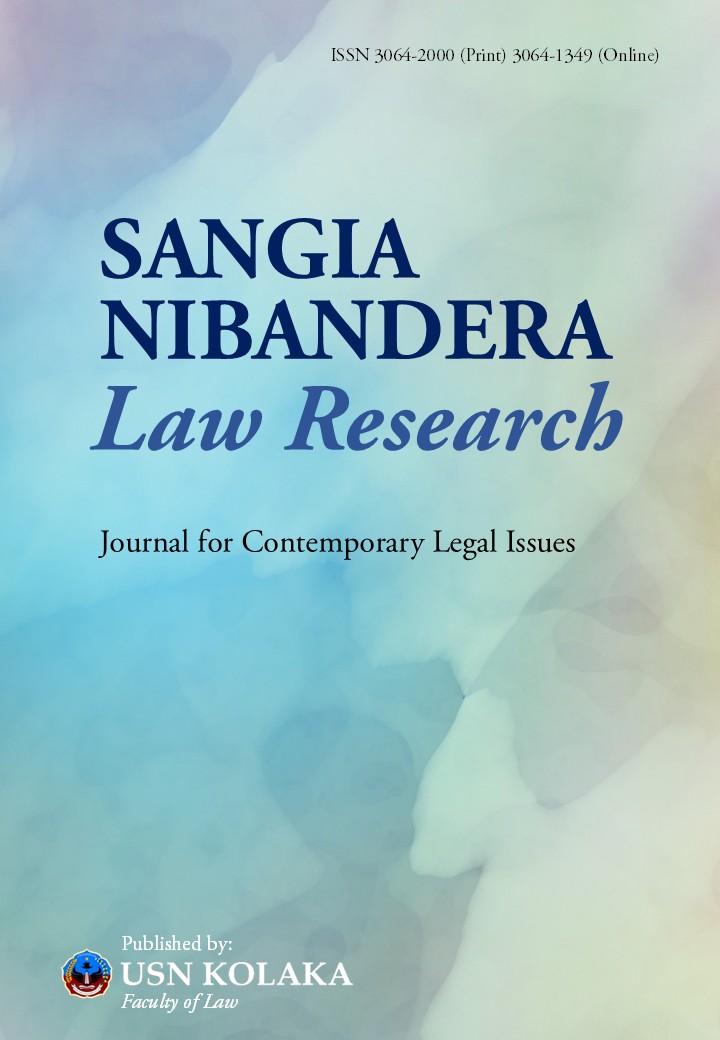
Sangia Nibandera Law Research
Sangia Nibandera Law Research (ISSN 3064-1349 / 3064-2000) is dedicated to advancing critical, contextual, and forward-looking legal scholarship that responds to the evolving dynamics of law in society. The journal focuses on interdisciplinary and comparative legal studies, emphasizing the interaction between law, culture, governance, and social justice. Its scope encompasses, but is not limited to, constitutional law, criminal law, civil law, environmental law, international law, and legal theory. The journal particularly welcomes research that explores indigenous legal perspectives, regional legal developments, and transformative legal reforms, especially within emerging and marginalized contexts. By promoting rigorous analysis and innovative approaches, Sangia Nibandera Law Research aims to serve as a platform for academics, practitioners, and policymakers to engage in meaningful dialogue, contribute to legal development, and shape responsive legal systems for the future.


-
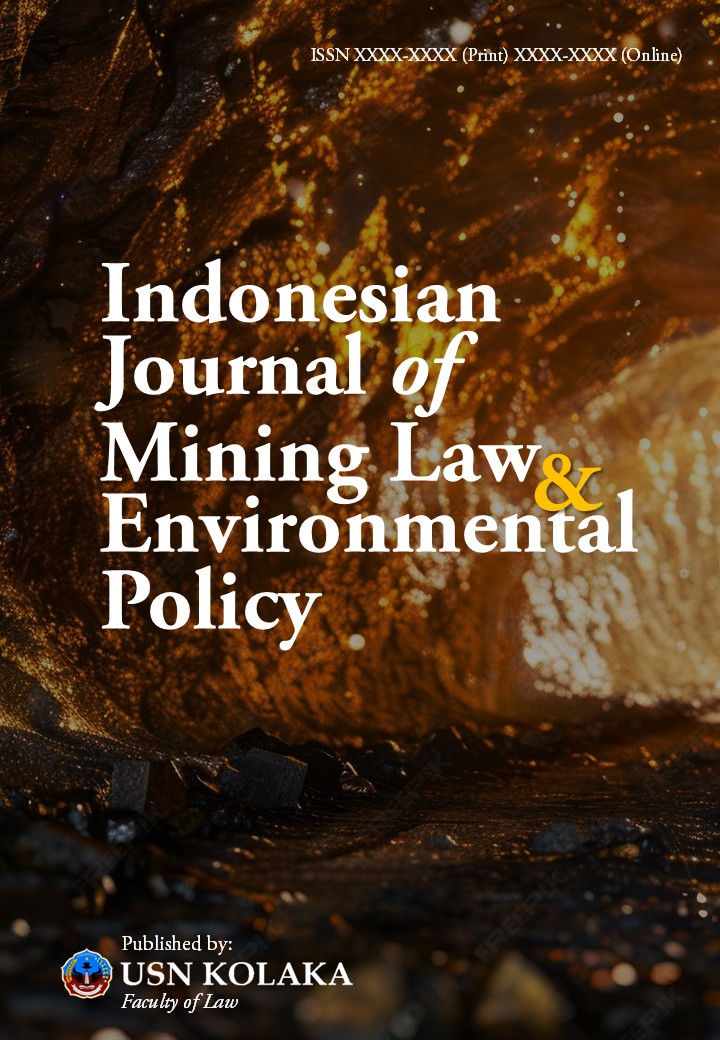
Indonesian Journal of Mining Law and Environmental Policy
Indonesian Journal of Mining Law and Environmental Policy is committed to fostering scholarly discourse on the legal, regulatory, and policy dimensions of the mining sector and its environmental implications. The journal emphasizes the intersection between natural resource governance, sustainable development, and environmental protection within both national and global contexts. The scope includes, but is not limited to, mining law and regulation, environmental law, energy and natural resources law, land use and spatial planning, climate change policy, and corporate responsibility in extractive industries. It also welcomes research on regulatory reforms, environmental impact assessment, community rights, indigenous participation, and conflict resolution in mining activities. With a particular focus on Indonesia while remaining open to comparative and international perspectives, the journal encourages interdisciplinary approaches that integrate legal analysis with economic, social, and environmental considerations. It aims to provide a platform for academics, policymakers, industry stakeholders, and civil society to contribute to the development of equitable, transparent, and sustainable mining governance.
-
Jurnal Pembangunan Hukum dan Masyarakat Indonesia
Jurnal Pembangunan Hukum dan Masyarakat Indonesia is a peer-reviewed scientific journal that focuses on the role of law as an instrument of intervention in addressing social problems in Indonesia. The journal publishes original research articles, conceptual studies, and critical analyses on legal development, regulatory reform, public policy, access to justice, human rights protection, dispute resolution, community empowerment, governance, and other contemporary legal issues that contribute to building a just, inclusive, sustainable, and rule-based society. The journal encourages multidisciplinary perspectives that integrate legal scholarship with social dynamics to promote responsive legal policies and practices capable of addressing the evolving challenges faced by Indonesian society.
Jurnal Pembangunan Hukum dan Masyarakat Indonesia merupakan jurnal ilmiah yang berfokus pada kajian mengenai peran hukum sebagai instrumen intervensi dalam menyelesaikan berbagai permasalahan sosial di Indonesia. Jurnal ini mempublikasikan artikel hasil penelitian, kajian konseptual, dan analisis kritis yang membahas pembangunan hukum, reformasi regulasi, kebijakan publik, akses terhadap keadilan, perlindungan hak asasi manusia, penyelesaian sengketa, pemberdayaan masyarakat, tata kelola pemerintahan, serta berbagai isu hukum kontemporer yang berkaitan dengan upaya menciptakan masyarakat yang adil, inklusif, berkelanjutan, dan berlandaskan supremasi hukum. Jurnal ini mendorong kontribusi multidisipliner yang menghubungkan ilmu hukum dengan dinamika sosial sebagai dasar pengembangan kebijakan dan praktik hukum yang responsif terhadap kebutuhan masyarakat.